
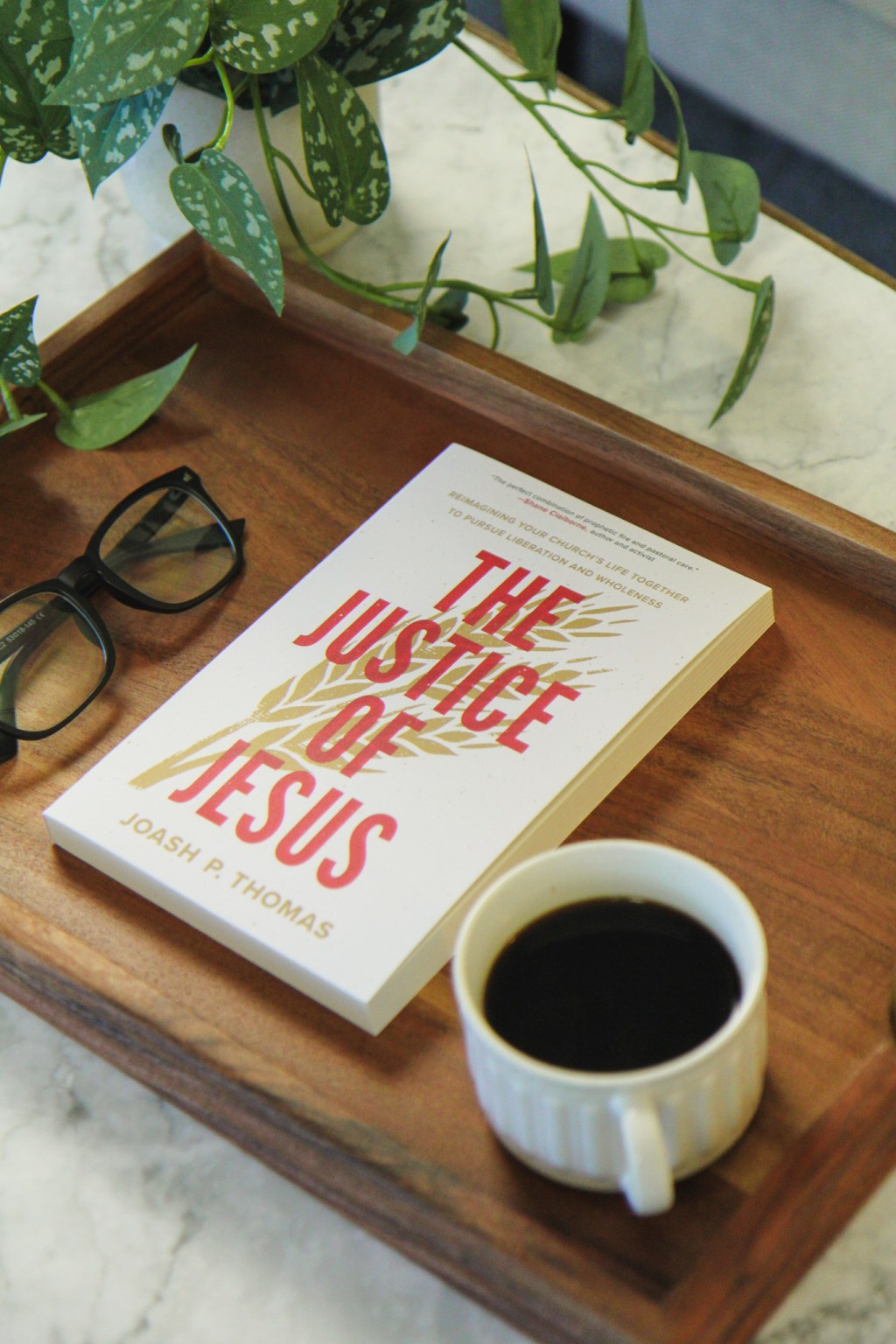
Every now and again, you read something that you wish you wrote. Joash Thomas’ book “The Justice of Jesus” is that for me. I am incredibly thankful for this book because as a racialized person who identifies as a Christian, I am tired. I am tired of having to explain the ways in which white supremacy plays a huge role in North American evangelical theology. I am tired of having to have difficult conversations about racism. I am tired of explaining and defining words and ideas like decolonization and deconstruction. With this book, I can just give it to someone, ask them to read it, and then we can have a conversation about the ways in which the Church can better live out the justice Jesus embodied and invites us to participate in. This book can serve as a foundational resource for anyone who wants to learn more about how Christianity (dare I say Christianities) is beautiful, messy, infuriating, and yet so absolutely, incredibly hopeful.
I met Joash on Twitter (I refuse to say X!) awhile back and really liked his posts and his vibes. I reached out to him and we became friends. Not just Twitter friends… in real life friends too. I know his phone number and we send WhatsApp messages to each other! I’ve had the pleasure of meeting with him personally and having many deep, awesome conversations. When I found out that he was writing this book, I was very happy. However, if I’m being honest, there was a part of me that was also anxious. I was anxious because I know his heart. He has a heart for the poor and the marginalized. He readily defends the oppressed and serves as a voice for those who have been silenced. It is precisely because of this that I was worried. I was worried because in this incredibly polarized world that we live in, these Christian virtues have often been demonized. We have those who profess to be Christians call empathy as a bad thing. I have seen how many Christian authors who advocate for kingdom ethics be attacked and have their reputations smeared with misinformation and threats of violence to their very selves (and even their families). By writing a book that forces its readers to confront the stark realities of colonialism, the pervasive nature of Whiteness, and the call to reflect and repent from these sins, Joash’s prophetic voice cannot be ignored. It is a challenge that he lays down for the reader and the reader is invited to sit in the discomfort of it all.
There are many books that have dealt with the Church’s relationship with racism, white supremacy, colonialism, and racism. This book is not alone in speaking to these issues. But what sets this book apart, for me at least, is the way in which it offers a robust theological imagination of what the Church can be should she allow herself to be freed from its shackles. This is the Church showing up as the best version of herself. Sure, she may not look like her best self right now. But that doesn’t mean that she needs to remain that way. One day, she will rise from her slumber, awakened by the gentle touch of her Master, and stand up once more to reflect the glory of the Lover of her soul. What a sight that would be to behold!
When I was reading the book, there were some parts in which I thought “hmmm, he definitely could have pushed harder!” and there were other parts in which I thought “ok, you did not have to hit me so hard with that!” That’s what I loved so much about this book. It was the internal interplay of ideas that made me clap so hard but also had to take a break because I felt like I was punched. For me, a good work of art is supposed to make you feel something. It can be happiness, joy, sadness, despair, anger, and maybe even, disgust. It can be positive emotions. It can be negative emotions. Whatever or however you may classify it, it has to make you feel. This book made me feel a lot of things. It encouraged me. It challenged me. It convicted me. What more can you ask for a book that talks about the justice of Jesus?

 Pensées by Sid