I wrote this article awhile ago for a particular group that shall remain nameless. The editor and I had different ideas on how to move forward so I decided to pull back my work from being considered. However, I’ve had people ask me if I have written on it before in a shorter version so I’ve decided to post this article on my website instead.
This was written with the lectionary in mind and these are my reflections based on certain biblical passages.
Jeremiah 4:11-12, 22-28
4:11 At that time it will be said to this people and to Jerusalem: A hot wind comes from me out of the bare heights in the desert toward my poor people, not to winnow or cleanse–
4:12 a wind too strong for that. Now it is I who speak in judgment against them.
4:22 “For my people are foolish, they do not know me; they are stupid children, they have no understanding. They are skilled in doing evil, but do not know how to do good.”
4:23 I looked on the earth, and lo, it was waste and void; and to the heavens, and they had no light.
4:24 I looked on the mountains, and lo, they were quaking, and all the hills moved to and fro.
4:25 I looked, and lo, there was no one at all, and all the birds of the air had fled.
4:26 I looked, and lo, the fruitful land was a desert, and all its cities were laid in ruins before the LORD, before his fierce anger.
4:27 For thus says the LORD: The whole land shall be a desolation; yet I will not make a full end.
4:28 Because of this the earth shall mourn, and the heavens above grow black; for I have spoken, I have purposed; I have not relented nor will I turn back.
What is good? What is evil? How does one understand, or even define, these terms? This is an ongoing debate that is present in every section of our society. Throughout the history of Christianity, Christians have debated on how to define “good” and “evil.” The very idea of Christian orthodoxy is based on Christianity’s attempt to establish a baseline of beliefs that should not be transgressed—if only to help draw a firm line on who is in and who is out—of the group. Religious terms like “heresy” and “schism” are nothing but a way to provide granular detail in the ways in which “evil” is understood. Numerous religious wars have been waged based on a particular group’s understanding of “good” and “evil.”
Problems arise when theological arguments that attempt to define “good” and “evil” are rooted in the belief of theological objectivity. The assumption is that the “theological” can be understood in a rational and objective manner. It does not take into account the role of emotions in the way in which one’s theology is expressed and manifested. One of the greatest lies of the Enlightenment is the belief that humans are rational beings. This pervasive rhetoric has caused many to believe that emotions are somehow base. Emotions are treated as inferior to rationality. Any argument can be dismissed by the simple incantation of “you’re being emotional right now.” As June Callwood notes, “When people say someone is emotional, they usually mean that the person is irrational, out of control.”[1] Christian theology has not adequately struggled with the pervasive ways in which emotions affect the very ways in which we construct, define, and enact our theology. The dominance of the historical-grammatical method as the only “acceptable” way to read the Bible among a certain subset of Christian clergy and lay people is both revealing and disconcerting. Any other method of reading the Bible is deemed as eisegesis. It is as if the exegete plays no discernible role in how the text is exegeted. This ongoing debate of exegesis vs eisegesis in how the text is read and understood is yet another reminder that “objectivity” is somehow attainable—if only one uses the proper technique or possesses the proper skills to handle the text.
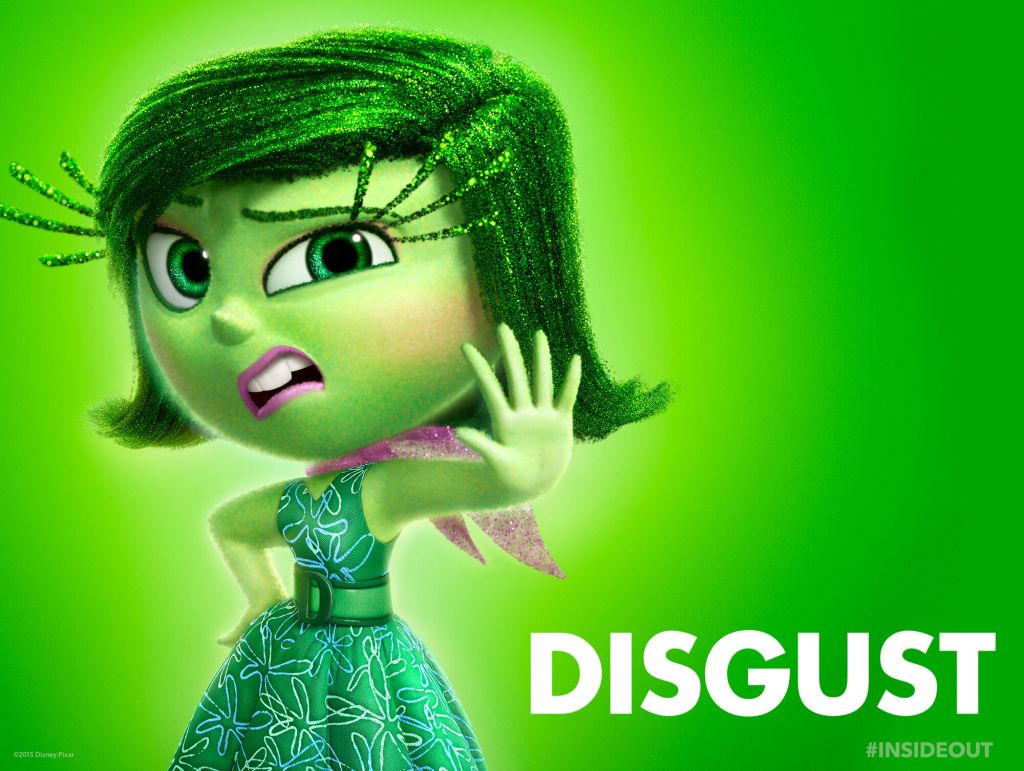
How one defines the terms “good” and “evil” will vary from person to person. An individual’s experience, social location, socio-economic status, race, gender, age, culture will affect the ways in which these terms are nuanced and understood. “Differences in moral codes underlie many current and historical conflicts in public policy, criminal justice, interreligious dialogue, and global politics.”[2] Among the different emotions, disgust is the primary emotion that is connected to our sense of morality and divinity. William Ian Miller notes that disgust “plays a motivating and confirming role in moral judgment … It ranks people and things in a kind of cosmic ordering.”[3] Richard A. Shweder and his colleagues identified three distinct ethics that helped cultures understand moral issues: the ethics of community, autonomy, and divinity. The ethics of divinity “relies on regulative concepts such as sacred order, natural order, tradition, sanctity, sin, and pollution. It aims to protect the soul, the spirit, the spiritual aspects of the human agent and ‘nature’ from degradation.”[4] Disgust is the main emotion that is associated with the divinity code. How we understand our relationship with the divine is strongly linked to disgust.
Chen-bo Zhong and Katie Liljenquist argue that people tend to use categories based on bodily experience (clean vs dirty) to construct complex social categories (moral vs immoral).[5] The language of “good” and “evil” is often mapped on to terms such as “pure” and “impure.” Disgust is a “system that monitors boundaries. [It] regulates the act of incorporation and inclusion.”[6] It is easy, then, to realize how quickly and how easily it is for an individual to be the arbiter of morality and theology. By aligning one’s self to God and with God, one can easily claim that they are the best individual to define what is “good” and what is “evil.” The definition of what is deemed as “good” and “evil” can so often be indistinguishable from the individual’s own sense of morality. A famous quote by Anne Lamott comes to mind: “You can safely assume you’ve created God in your own image when it turns out that God hates all the same people you do.” Too often, there is no distinction between an objective and a subjective definition.
Martha Nussbaum argues that “[e]motions shape the landscape of our mental and social lives.”[7] It is rather interesting to note that disgust does not appear in the first three years of an infant’s life. It is something taught by parents and society. This makes disgust an amazingly powerful tool for social teaching.[8] Since disgust is something that can be taught and passed down to individuals, it is not so far-fetched to acknowledge that a culture can easily create what is deemed a disgusting stimulus. If, as mentioned, disgust can be taught, and if, as mentioned, disgust can be used as a tool for social teaching, the line between the objective and the subjective are blurred to the point of non-existence. In the same way that God calls something out of nothing, disgust can mimic this same god-like quality. Disgust is a creator of worlds; disgust is also a destroyer of worlds.
Disgust affects our theology. It helps us define what is “good” and what is “evil.” It gives us the tools to “rightly” embody our “proper” theology. The difficulty lies in our lack of awareness and understanding of the role of disgust in creating, forming, shaping, moulding, and embodying theology. The refusal to take into consideration the role of disgust in our theology-making can help us make sense of what is currently happening in North American evangelical Christianity. The Bible is full of exhortations to take care of the poor, to be a voice for the voiceless, to provide for the needs of orphans and widows. The Bible constantly shows God siding with the oppressed and exacting vengeance against the oppressors. Yet, many evangelical voices have often spoken out against giving aid to refugees and refuse to provide financial assistance to the poor. In light of this reality, the rebuke from the Almighty in Jeremiah 4:22 rings powerful and true: “For my people are foolish, they do not know me; they are stupid children, they have no understanding. They are skilled in doing evil, but do not know how to do good.”
Our theology is not disembodied. Too often theology can be framed as if it was composed of abstract concepts. My desire is to remind us that our theology is culturally embedded. As Heather Looy asserts: “The triggers of disgust are learned in community and play a crucial role in cultural identity, revealing our embeddedness and relationality … Many disgust triggers are linked explicitly to divine expectations and demands, reflecting human spirituality.” [9] Disgust is a mechanism by which we order the world. Our moral and religious judgments are often tainted, if not predicated, by disgust. We cannot forget the absolute power of our emotions, especially as it relates to our actions. Our humanity will seep into our conception of the divine. On a primal level, we cannot escape the reality that our feeling of disgust is linked to how we enact and embody theology.
Bibliography
Beck, Richard. Unclean: Meditations on Purity, Hospitality, and Mortality. Eugene: Wipf and Stock, 2011.
Callwood, June. Emotions: What They Are and How They Affect Us, from the Basic Hates & Fears of Childhood to More Sophisticated Feelings That Later Govern Our Adult Lives. How We Can Deal with the Way We Feel. Edited by June Callwood. Garden City: Doubleday, 1986.
Looy, Heather. “Embodied and Embedded Morality: Divinity, Identity, and Disgust.” Zygon 39, no. 1 (2004): 219–35.
Miller, William Ian. The Anatomy of Disgust. Cambridge: Harvard University Press, 1997.
Nussbaum, Martha Craven. Upheavals of Thought: The Intelligence of Emotions. Cambridge: Cambridge University Press, 2001.
Shweder, Richard A., Nancy C. Much, Manamohan Mahapatra, and Lawrence Park. “The” Big Three” of Morality (Autonomy, Community and Divinity) and the “Big Three” Explanations of Suffering.” In Morality and Health, edited by Allan M. Brandt and Paul Rozin, 119–69. New York: Routledge, 2013.
Zhong, Chen-bo, and Katie Liljenquist. “Washing Away Your Sins: Threatened Morality and Physical Cleansing.” Science 313 (2006): 1451–52.
[1] June Callwood, Emotions: What They Are and How They Affect Us, from the Basic Hates & Fears of Childhood to More Sophisticated Feelings that Later Govern our Adult Lives: How We Can Deal with the Way We Feel, ed. June Callwood (Garden City: Doubleday, 1986), 35.
[2] Heather Looy, “Embodied and Embedded Morality: Divinity, Identity, and Disgust,” Zygon 39, no. 1 (2004): 220.
[3] William Ian Miller, The Anatomy of Disgust (Cambridge: Harvard University Press, 1997), 2.
[4] Richard A. Shweder et al., “The” Big Three” of Morality (Autonomy, Community and Divinity) and the “Big Three” explanations of suffering,” in Morality and Health, ed. Allan M. Brandt and Paul Rozin (New York: Routledge, 2013), 138.
[5] Chen-bo Zhong and Katie Liljenquist, “Washing Away Your Sins: Threatened Morality and Physical Cleansing,” Science 313 (2006): 1451.
[6] Richard Beck, Unclean: Meditations on Purity, Hospitality, and Mortality (Eugene: Wipf and Stock, 2011), 26.
[7] Martha Craven Nussbaum, Upheavals of Thought: The Intelligence of Emotions (Cambridge: Cambridge University Press, 2001), 1.
[8] Nussbaum, Upheavals of Thought, 204.
[9] Looy, “Embodied and Embedded Morality: Divinity, Identity, and Disgust,” 222.

 Pensées by Sid